Why Do German Shepherds Bark at Other Dogs?
Last Updated: October 25, 2026
Quick Summary
German Shepherds bark at other dogs for reasons including alerting, frustration, fear, over-arousal, or a rehearsed habit that has paid off before. A frustrated barker and a frightened barker need different plans, so work out which one you have. Distance is your main tool: find the point where your dog notices another dog but can still take a treat and turn their head.
Change walk times and routes so your dog stops practising the bark daily.
Move closer to other dogs only when your dog stays calm.
Mark and reward your dog when he looks at another dog and back at you.
Catch the body freeze and turn your dog away before the noise starts.
Keep training sessions short: five good minutes beats a forty-minute battle.
Table of Contents
Why German Shepherds Bark at Other Dogs
How to Stop a Dog Barking at Other Dogs
Reading German Shepherd Body Language Around Dogs
Frequently Asked Questions
Why German Shepherds Bark at Other Dogs
German Shepherds bark at other dogs for a handful of reasons: alerting, frustration, fear, over-arousal, or a rehearsed habit that has paid off before. At White Wolf Dog Training in Reading, we often see this in adolescent and adult shepherds who have practised it for months.
Barking is communication, usually one of these:
Alert barking: "Something is here." Common at the fence or front window.
Frustration barking: the dog wants to reach the other dog and cannot.
Fear or defensive barking: the dog feels cornered, usually on lead.
Over-arousal: too wound up to think, so the mouth takes over.
A frustrated barker and a frightened barker need different plans.
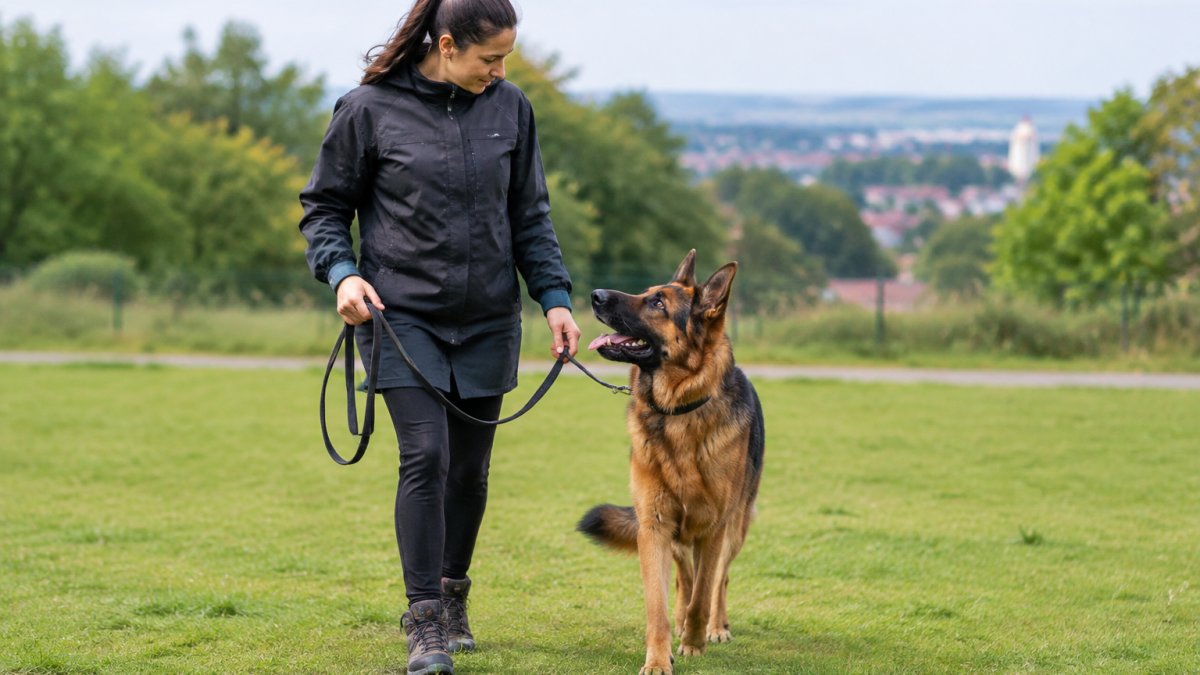
Distance is your main tool. Find the point where your dog notices another dog but can still take a treat and turn his head, his threshold. Work below it, never above it.
If the barking has been running for months, book a free one-to-one assessment so we can watch the behaviour and build a plan around your dog.
The main reasons a German Shepherd barks at other dogs, and what each one looks like in practice.
Reason | What it looks like |
Alert barking | Common at the fence or front window |
Frustration barking | Dog wants to reach the other dog and cannot |
Fear or defensive barking | Dog feels cornered, usually on lead |
Over-arousal | Too wound up to think, so the mouth takes over |
How to Stop a Dog Barking at Other Dogs
Stopping barking at other dogs means changing what your dog does instead, not just suppressing the noise. Quiet is a by-product of a calmer dog.
Here is the sequence we use:
Cut the rehearsals. Change walk times and routes so your dog stops practising the bark daily.
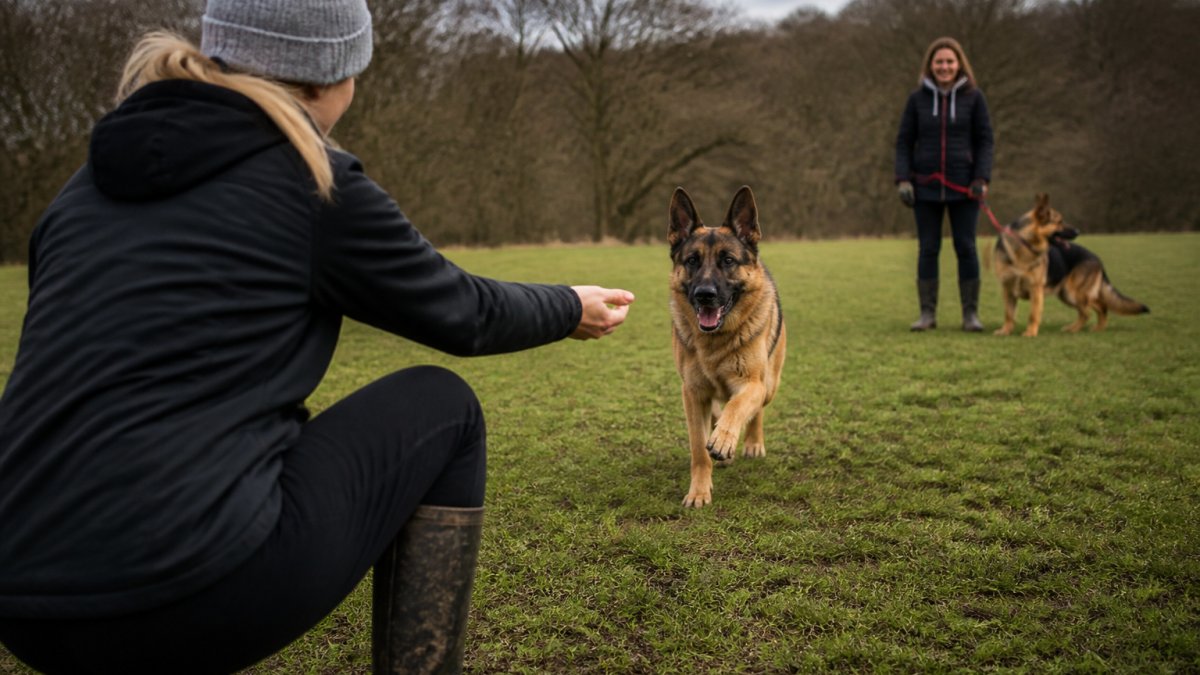
Work at distance. Move closer only when they stays calm.
Mark and pay quiet. When your dog looks at another dog and back at you, mark it and reward.
Add an alternative behaviour. A hand touch, a turn, or a sit gives the dog something to do instead of shouting.
Keep sessions short. Five good minutes beats a forty-minute battle.
Correcting the bark with a lead jerk or a shout often adds tension and makes the next dog more alarming. If the barking is paired with lunging, our guide to stopping a German Shepherd lunging at dogs covers the lead work in detail.
For staying calm near other dogs, read helping dogs become neutral in challenging situations; for walking mechanics, see loose lead walking for reactive German Shepherds.
For hands-on help, request a free one-to-one consultation in Reading and the surrounding areas.
Reading German Shepherd Body Language Around Dogs
Reading your German Shepherd's body language around other dogs makes everything easier. The early signals are quiet and come well before the bark.

Look for the build-up:
Ears forward and stiff: the dog has locked on.
Body freeze: a pause before the explosion. This is your window.
Hard stare: eyes fixed, head low.
Lead pulling and whining: frustration is rising.
Lip lick or yawn: stress, not tiredness.
Catch the freeze and you can turn your dog away before the noise starts.
For a fuller breakdown, our article on reactive dog body language walks through the four key signs.
Barking at other dogs is a behaviour with a cause, and causes can be changed. White Wolf Dog Training works one-to-one with reactive German Shepherds across Reading and the surrounding areas, using a relationship-based approach that builds impulse control and helps your dog stay neutral around other dogs. Book your free no-obligation 1:1 assessment to build a calmer, more connected life with your dog.
Frequently Asked Questions
Why does my German Shepherd bark at dogs on walks but not at home?
Walks introduce triggers that don't exist at home: unfamiliar dogs, unpredictable movement and territory that isn't yours. A German Shepherd who is calm indoors may still bark outside because the environment raises arousal and leaves less room to retreat. This is common in adolescent and rescue dogs. Training needs to happen where the barking occurs, not only in the garden, which is why one-to-one work in real walking environments helps.
Is barking at other dogs a sign of aggression in German Shepherds?
Not always. Barking can signal fear, frustration, excitement or a warning, and the body language tells you which. A stiff, forward-leaning dog with a hard stare is more concerning than a bouncing, whining dog who wants to greet. German Shepherd body language around dogs is the best guide. A qualified trainer can assess the pattern before you label the dog aggressive.
How can I stop my German Shepherd barking at other dogs?
Start by increasing distance from other dogs so your German Shepherd can stay under threshold, then reward calm behaviour before the bark starts. Teach a reliable U-turn and a focus cue, and practise loose-lead walking around dogs in low-distraction settings first. Consistency matters more than intensity. If barking persists after several weeks, seek reactive German Shepherd training for a tailored plan.
Book Your FREE no obligation 1:1 assessment
Add whitewolfdogtraining.com as a preferred source on Google →
Comments