Read Reactive Dog Body Language: 4 Key Signs
Last Updated: 25 October 2026
Quick Summary
Read reactive dog body language by spotting early warning signs such as stiff posture, pinned ears, intense staring, and shallow breathing. Recognising these signals lets you create distance and redirect your dog before escalation occurs, teaching them to stay calm instead of reacting.
Stiffness, locked posture, and forward-pinned ears are early signs of building tension in reactive dogs.
Calming signals like yawning, looking away, and nose-licking show your dog is uncomfortable but trying to stay in control.
On walks, watch for sudden stops, weight shifting forward, neck stretching, mouth tightening, and raised spine hair as tension builds.
Creating distance by moving sideways, crossing the road, or turning around teaches your dog that reacting isn't necessary.
Reactivity is a learned response that can change through understanding, patience, and the right training approach.
Table of Contents
Early Warning Signs of Dog Reactivity
Dog Calming Signals: What Your Reactive Dog Is Telling You
Dog Body Language on Walks: Reading Tension Before It Escalates
Frequently Asked Questions
Early Warning Signs of Dog Reactivity
Dogs rarely lunge or bark without warning. Learning to read reactive dog body language lets you step in early and redirect before escalation.
Watch for stiff, locked posture, ears pinned forward or back, an intense stare, shallow breathing, or sudden freezing. At White Wolf Dog Training, we help owners catch these signals, move their dog away, create distance, and reward calm behaviour so the dog learns to look to you instead of reacting. Learn how our specialised training programs address reactivity across multiple core areas of your dog's behaviour.

Discover the structured approach to help dogs stay neutral in challenging situations using desensitisation and threshold work to build lasting change.
Dog Calming Signals: What Your Reactive Dog Is Telling You
When your dog yawns, looks away, or licks their nose in a tense moment, they're trying to calm themselves down. These signals mean they're uncomfortable but working hard to stay in control, help them manage that discomfort rather than pushing them closer to the trigger.
Understanding how trust and bonding underpin your reactive dog's ability to communicate and respond to training helps you build the foundation for real change.
Dog Body Language on Walks: Reading Tension Before It Escalates
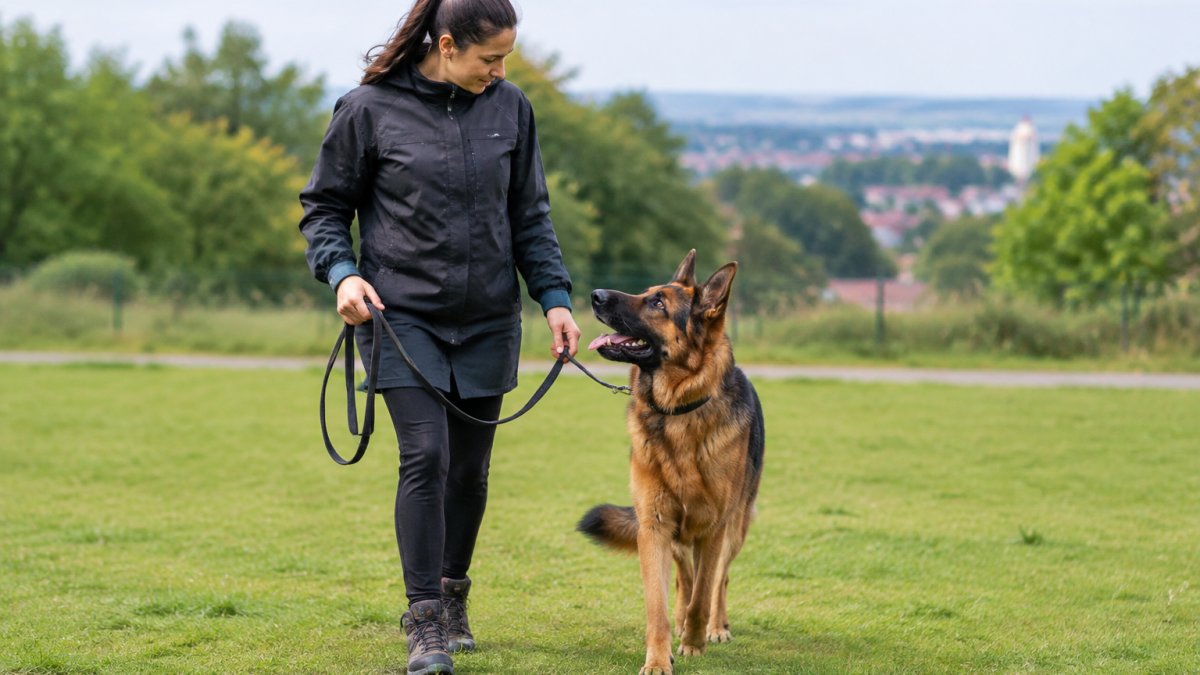
Reading reactive dog body language on walks means spotting tension in real time: a sudden stop, weight shifting forward, neck stretching towards the trigger, mouth tightening, or hair standing along the spine. Most reactive dogs progress from tension to fixation to outburst, so create space, move sideways, cross the road, or turn around. This is management and communication, not punishment; each time you create distance at the right moment, you teach your dog that reacting isn't necessary.
For personalised guidance on your dog's specific reactive behaviours, contact White Wolf Dog Training for a free one-to-one consultation in Reading or the surrounding areas.
Learning to read reactive dog body language transforms how you walk your dog. Recognising stiffness, fixation and calming attempts early, then responding with distance and calm reassurance, gives your dog the chance to succeed. Reactivity is a learned response that can change through understanding, patience and the right training.
Watch for these physical signs of tension during walks to catch reactivity before it escalates.
Sign | What it means | What to do |
Sudden stop | Dog is fixating on trigger | Create space, move sideways or cross road |
Weight shifting forward | Tension building towards trigger | Turn around or increase distance |
Neck stretching towards trigger | Dog is focused and preparing to react | Move away from the trigger |
Mouth tightening | Dog is uncomfortable and holding control | Provide reassurance and distance |
Hair standing along spine | Physical tension and arousal | Redirect calmly away from situation |
Frequently Asked Questions
How can you tell if a dog is becoming reactive?
Watch for stiffening in the body, forward-pointing ears, a fixed stare, and raised hackles along the spine. Many dogs also show lip licking, yawning, or a tucked tail before lunging or barking. These signs appear within seconds of spotting a trigger. If you notice your dog's body tensing during walks, you've caught the early window to redirect their attention before reactivity escalates.
What does a stiff body mean in a dog?
A stiff, frozen posture signals high arousal and often precedes reactive behaviour. When a dog's muscles lock and they stop moving naturally, they're in a heightened emotional state, either fear, frustration, or excitement. Combined with a hard stare or forward ears, this is a critical moment to create distance or redirect. Learning to spot this tension is key to managing reactivity before it becomes a full lunge or bark.
What are dog calming signals and why do they matter?
Calming signals are behaviours dogs use to reduce tension, like lip licking, yawning, sniffing the ground, or turning their head away. Your reactive dog may show these when stressed or trying to avoid confrontation. Recognising these signals helps you understand your dog's emotional state and shows you when they're struggling. Using calming signals yourself, soft eye contact, slow movements, can help settle your dog during challenging moments on walks.
Book Your FREE no obligation 1:1 assessment
Add whitewolfdogtraining.com as a preferred source on Google →
Comments