How to Help Dogs Become Neutral in Challenging Situations
Table of Contents
Why Some Dogs Struggle in Challenging Situations
Reading Your Dog's Body Language Before They React
What You'll Need Before You Start Training
Step 1: Find Your Dog's Reactive Dog Threshold Distance
Step 2: Dog Desensitisation and Counter-Conditioning Explained
Step 3: Build a Reactive Dog Training Plan That Fits Your Week
Setting Realistic Timelines and Tracking Progress
Step 4: How to Train a Dog to Ignore Other Dogs in Real Life
Common Mistakes That Set Training Back
When to Get Professional Help for a Reactive Dog
Frequently Asked Questions
Last Updated: 12 October 2026
Why Some Dogs Struggle in Challenging Situations
Reactivity rarely appears out of nowhere. A dog who lunges, barks, or freezes at the sight of another dog is usually responding to a genuine emotional reaction, not being stubborn or dominant. This guide from White Wolf Dog Training explains how to help dogs become neutral in previously challenging situations, using a relationship-based approach.
The world simply feels too close for some dogs. A dog may have had limited early socialisation, a frightening encounter, or a genetic tendency towards vigilance. German Shepherds often fall into the last group. Their protective instincts are part of the breed, and that same alertness that makes them brilliant working dogs can tip into overreaction on an ordinary walk.
Neutrality is the goal. A neutral dog notices another dog, then chooses to disengage.
Reading Your Dog's Body Language Before They React
Early signals are your best tool. Most owners only spot the explosion, missing the build-up that came seconds before. Learn the quiet signs first:
Stiff, still body with weight shifted forward
Hard staring that will not break
Lip licking, yawning, or sudden sniffing of the ground
Ears pinned back or locked forward
A closed mouth that was previously relaxed
Lead going tight before you have moved
These are the moments to act. Once you can read them, you can create distance before your dog tips over threshold.
What You'll Need Before You Start Training
You need very little kit, but the right mindset matters more than equipment. Before you begin, gather:
A well-fitted harness or flat collar and a fixed-length lead
High-value treats your dog will work for outdoors
A treat pouch for quick access
A quiet route you can control
A training log to track distance and reactions
Leave the retractable lead at home. You need fine control over distance, and a retractable lead gives that away. White Wolf Dog Training builds every plan around the individual dog, so adjust this list to suit yours.
Pro Tip Practice your treat delivery at home first. If you fumble the timing when a dog appears, you lose the moment that teaches your dog what to do instead.
Step 1: Find Your Dog's Reactive Dog Threshold Distance
Your dog's reactive dog threshold distance is the point where they can still notice a trigger without reacting. Finding it is the foundation of all the work that follows.
Start far enough away that your dog notices the other dog but stays calm. Watch for the early signals above. If they appear, you are too close. Increase the gap and try again.

Mark the distance in your head. Ten metres, twenty, fifty. That number becomes your starting point, and it will shrink over time.
Step 2: Dog Desensitisation and Counter-Conditioning Explained
Dog desensitisation and counter-conditioning is the process of pairing a trigger with something good, at a distance where your dog stays calm, until the trigger itself predicts a reward.
Desensitisation means gradual, repeated exposure at a level your dog can handle. Counter-conditioning changes how your dog feels about the trigger. Together, they shift your dog from "danger" to "treats are coming."
The order matters. Feed, then let the dog pass. Not the other way round. If you reward after the reaction, you pay for the wrong behaviour.
Trigger appears at threshold distance
Mark and feed immediately
Trigger leaves, treats stop
Repeat until the sight of a dog predicts good things
Step 3: Build a Reactive Dog Training Plan That Fits Your Week
A reactive dog training plan only works if you can actually follow it. Short, frequent sessions beat long, occasional ones.
Aim for three to five short walks a week where you can control distance. Ten to fifteen minutes is plenty. Consistency matters more than duration.
Setting Realistic Timelines and Tracking Progress
Most dogs improve over weeks and months, not days. Progress is rarely a straight line. A bad day after a good week is normal.
Track these in your log:
Distance at which your dog stayed calm
Number of reactions per walk
Recovery time after a reaction
New environments you have tested
Watch Out Do not judge progress by a single walk. Owners often quit after one bad day, when the trend over three weeks was clearly improving.
Step 4: How to Train a Dog to Ignore Other Dogs in Real Life
Learning how to train a dog to ignore other dogs starts in controlled setups, then moves into the real world in small steps.
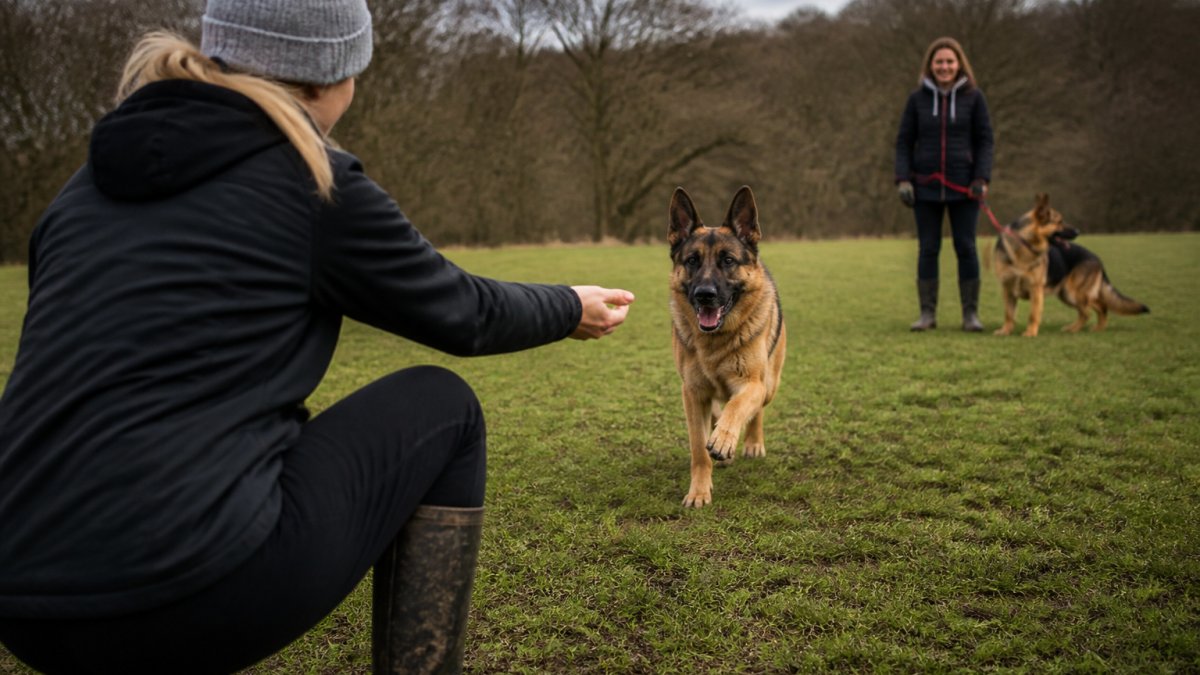
Begin on quiet streets at quiet times. As your dog stays calm, reduce the distance or add mild distractions. Then try busier routes.
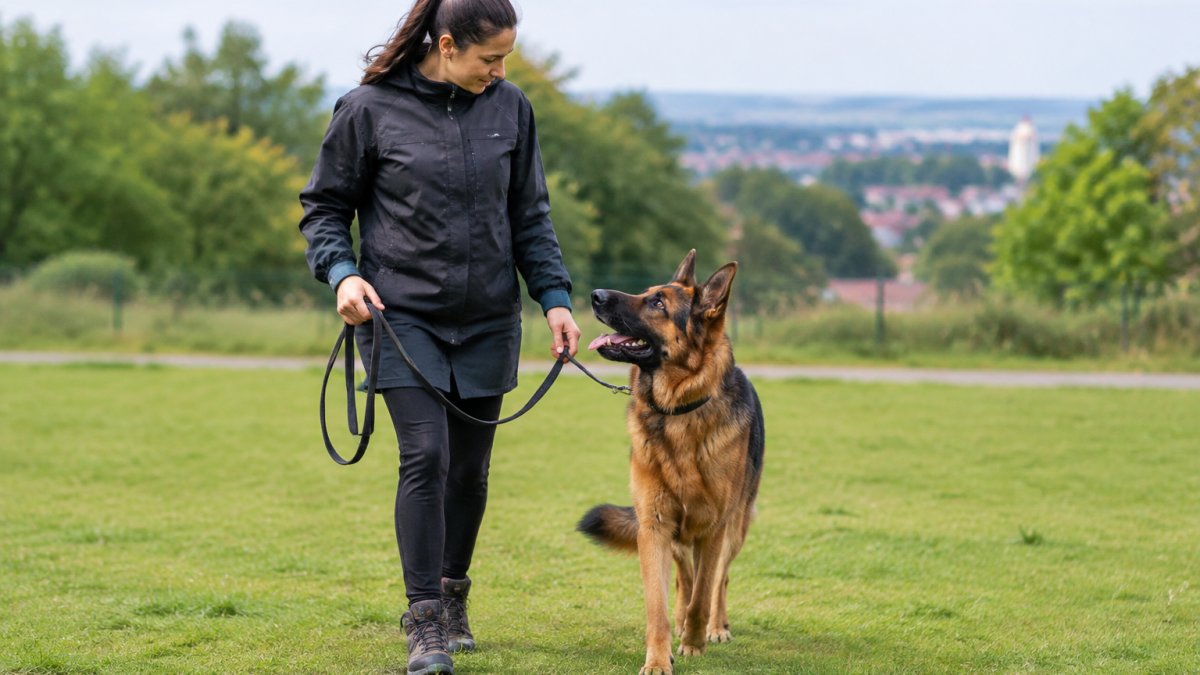
Your job on every walk is simple. Watch your dog, keep the lead loose, and reward calm behaviour the moment it happens. If your dog reacts, create distance and reset.
Key Takeaway Neutrality is not about your dog never noticing other dogs. It is about your dog noticing, then choosing to stay calm and check in with you.
Common Mistakes That Set Training Back
The biggest mistake is flooding. Owners let a dog get too close, hoping they will "get used to it." This usually makes reactivity worse.
Other common errors:
Punishing the growl or bark, which suppresses the warning without fixing the fear
Training only when things go wrong, not during calm moments
Moving too fast once progress appears
Using the same low-value treats indoors and outdoors
A common mistake is skipping the calm repetitions. The quiet walks where nothing happens are where the learning actually takes place.
When to Get Professional Help for a Reactive Dog
Some dogs need hands-on guidance, and that is not a failure. Seek help if your dog has bitten or attempted to bite, if progress has stalled for months, or if you feel unsafe or overwhelmed.
At White Wolf Dog Training, we specialise in reactive German Shepherds. Our one-to-one sessions review your dog's history and build a plan around your goals. We are a member of the British Association for German Shepherd Dogs, and we work with owners across Reading, Wokingham, and Bracknell.
If you are considering rehoming because of reactivity, please talk to us first. We regularly work with dogs that other approaches have not helped.
Frequently Asked Questions
What does neutrality mean in dog training?
Neutrality means your dog can notice a trigger, such as another dog or a person, without lunging, barking, or shutting down. They stay relaxed enough to respond to you and make good choices. It is not about suppressing behaviour through punishment. It is a calm, trained response built through gradual exposure and positive reinforcement. For reactive German Shepherds, neutrality is the goal that replaces the cycle of reacting first and thinking second.
How far away should my dog be from a trigger during training?
Your dog's reactive dog threshold distance is the point where they notice a trigger but can still eat, listen, and think. For many reactive dogs this is 10 to 20 metres, but it varies by dog and situation. Start further away than you think you need. If your dog stops taking food, stiffens, or stares, you are too close. Move back until they can engage with you again, then work at that distance before gradually closing the gap.
How long does it take to help a reactive dog become calmer?
There is no fixed timeline. Some dogs show clear progress in four to six weeks of consistent daily practice, while others need several months. German Shepherds with years of rehearsed lunging often take longer because the behaviour is well practised. Progress depends on how often you train, how well you manage the environment, and whether you work at the right threshold distance. A structured reactive dog training plan with regular reviews keeps momentum steady.
What should I do if my dog reacts during a training session?
Stay calm, increase distance from the trigger, and give your dog space to recover. Do not correct or punish the reaction, as this adds stress to an already stressful moment. Once your dog can take food and respond to you again, you can continue at a greater distance. Note what happened, including the trigger, the distance, and your dog's body language. That information helps you adjust your reactive dog training plan and avoid repeating the same setup.
Reactivity is exhausting, and it is easy to feel like you have run out of options. White Wolf Dog Training offers empathetic, one-to-one training built around your dog's history and your goals. Our relationship-based method helps your dog build impulse control, reliable recall, and calm neutrality on every walk. Book your free, no-obligation 1:1 assessment and take the first step toward a calmer life together.
Comments