Loose Lead Walking for Reactive German Shepherds
Table of Contents
Understanding German Shepherd Lead Reactivity
What You'll Need Before Starting
Finding Your Dog's Reactive Dog Threshold Distance
Counter-Conditioning for Reactive Dogs: The Foundation
Teaching Loose Lead Walking Training Step by Step
Common Mistakes to Avoid
Building Consistency and Progress
Frequently Asked Questions
Last Updated: October 14, 2026
Understanding German Shepherd Lead Reactivity
German Shepherds are intelligent, protective dogs. That strength comes with a challenge: loose lead walking reactive German Shepherd behaviour. Your dog lunges, barks, or pulls when other dogs, people, or vehicles appear. The behaviour isn't aggression, it's fear, frustration, or overstimulation.
Reactivity happens because your dog's brain is in overdrive. When a trigger appears, your German Shepherd reacts before thinking. The nervous system floods with stress chemicals. Your dog can't hear you. He can't focus. He just reacts.
This is where loose lead walking training changes everything. At White Wolf Dog Training, teaching loose lead walking isn't just about lead control, it's about rewiring how your dog responds to triggers. When your dog learns to walk calmly beside you, his brain chemistry shifts. He becomes calmer. He trusts you more. The reactivity decreases.
Key Takeaway Loose lead walking for reactive German Shepherds isn't a quick fix. It's a foundation that teaches your dog to stay calm around triggers by building impulse control and trust.
What You'll Need Before Starting
Before you begin loose lead walking training with your reactive German Shepherd, gather the right tools. The right equipment makes training easier and safer for both of you.
Essential equipment:
A 1.5-2 metre lead (not a retractable lead, you need control)
A well-fitted harness or collar (check it doesn't pull on the neck)
High-value treats your dog loves (small, soft pieces work best)
A quiet location to start training
Patience and consistency
The lead matters more than you'd think. A standard lead gives you better control than a retractable one. Your German Shepherd needs to feel your guidance clearly. A retractable lead sends mixed signals, sometimes there's tension, sometimes there isn't.
Your treats should be something your dog rarely gets. If you use kibble he eats every day, he won't care. Use chicken, cheese, or liver. Something that makes him think, "This is worth paying attention for."
Pro Tip Start training in a quiet location, your garden or a quiet street. Don't attempt loose lead walking training around triggers until your dog has learned the basics. Build the behaviour in a calm environment first, then gradually introduce distractions.
Finding Your Dog's Reactive Dog Threshold Distance
Your German Shepherd has a distance where he feels safe. Beyond that distance, triggers don't bother him. Inside that distance, he reacts. Finding this threshold is crucial.

Threshold distance varies by dog and trigger. Your dog might react to other dogs at 20 metres but stay calm at 25 metres. He might react to cars at 10 metres but stay calm at 15 metres. Your job is to find these distances.
How to identify threshold distance:
Take your dog out during quiet times
When you spot a trigger, watch your dog's body
Note the distance where his ears perk up or his body tenses
That's your threshold, the point where he notices but hasn't reacted yet
Write it down
Your dog's threshold might change day to day. A tired dog might have a larger threshold. A stressed dog might have a smaller one. Check regularly.
Working below threshold is where training happens. When your dog is below his reactive threshold, he can think. He can learn. He can make good choices. Above threshold, his brain shuts down. He reacts. That's not training, that's chaos.
Counter-Conditioning for Reactive Dogs: The Foundation
Counter-conditioning rewires your dog's emotional response to triggers. Instead of reacting with fear or frustration, your dog learns to expect something good when triggers appear.
The process is simple but requires consistency. When your German Shepherd sees a trigger at a safe distance (below threshold), something positive happens. He gets a treat. He gets praise. He learns: "Trigger appears, good things happen to me."
Over time, his brain changes. The trigger stops meaning danger. It starts meaning opportunity. His nervous system relaxes. His reactivity decreases.
The counter-conditioning sequence:
Spot a trigger at safe distance (below threshold)
Your dog notices the trigger
Immediately reward with a treat and praise
Repeat dozens of times
Gradually decrease distance as your dog improves
Continue until your dog looks at you when triggers appear
This isn't about forcing your dog to ignore triggers. It's about changing what triggers mean to him. When done correctly, your dog actually wants triggers to appear because good things follow.
Watch Out Never reward your dog while he's reacting. If he's lunging or barking, you're above threshold. Move away, create distance, and try again when he's calm. Rewarding during a reaction reinforces the reactivity.
Teaching Loose Lead Walking Training Step by Step
Loose lead walking training builds on counter-conditioning. Your dog learns to walk beside you with a slack lead, even when triggers appear.
Step 1: Teach the basics in a quiet space
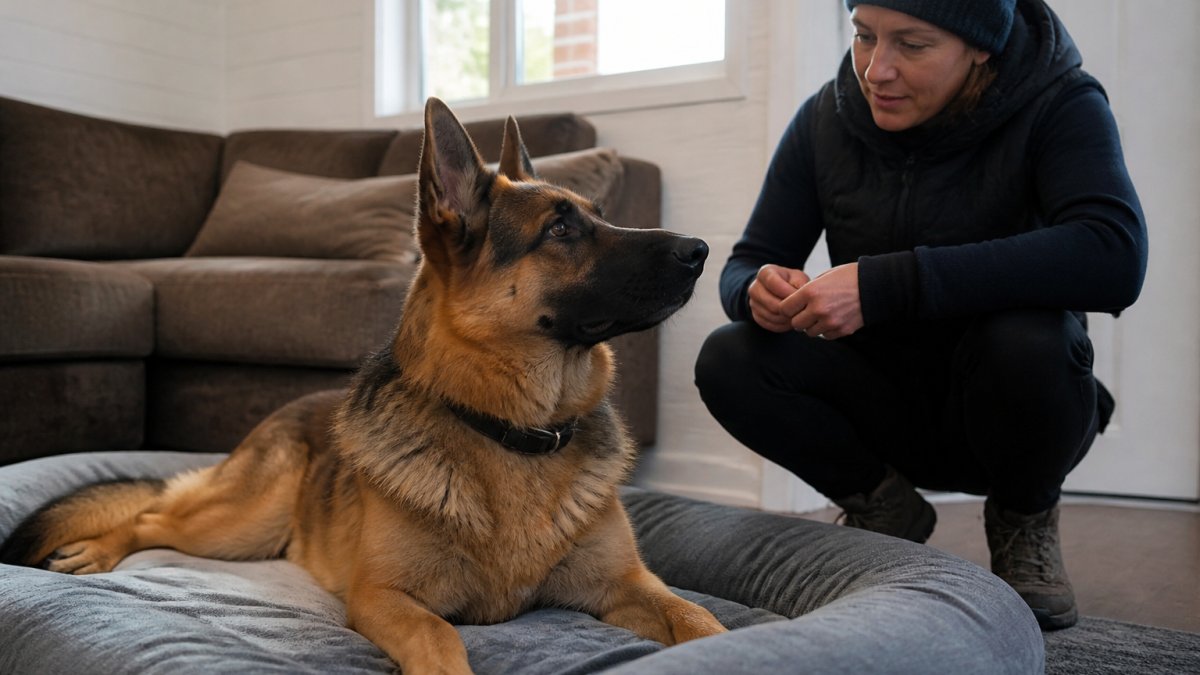
Start indoors or in your garden. No distractions. Your dog should focus only on you.
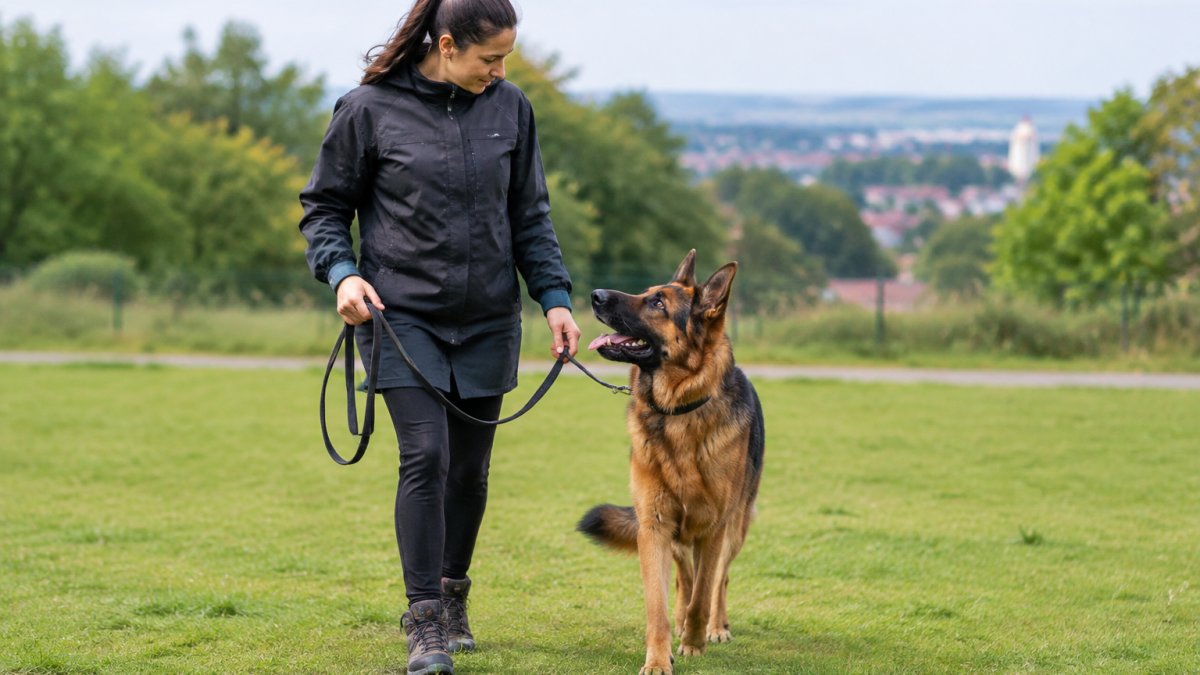
Hold the lead loosely. Take a step. The moment your dog walks beside you without pulling, reward with a treat and praise. Repeat for 5-10 minutes. Do this daily.
Your dog learns: "Walking beside you = good things happen." This is the foundation.
Step 2: Add a cue word
Choose a word like "heel" or "with me." Say the word as your dog walks beside you. Reward immediately. After dozens of repetitions, your dog associates the word with the behaviour.
Step 3: Introduce minor distractions
Once your dog walks calmly beside you indoors, add tiny distractions. A toy on the floor. A door opening. Nothing scary, just small interruptions.
Your dog learns to stay focused on you despite minor distractions.
Step 4: Practise around real triggers at safe distance
Now take your dog out near triggers, but stay well below his threshold distance. Use the same loose lead walking technique.
When your dog walks calmly beside you near a trigger, reward heavily. This is the big step. Your dog learns: "Even when triggers are around, I walk calmly beside you."
Step 5: Gradually decrease distance
As your dog improves, slowly move closer to triggers. Maybe 1-2 metres closer each week. Only move closer if your dog stays calm.
If your dog reacts, you've moved too fast. Go back to a greater distance and progress more slowly.
Step 6: Practise in varied locations
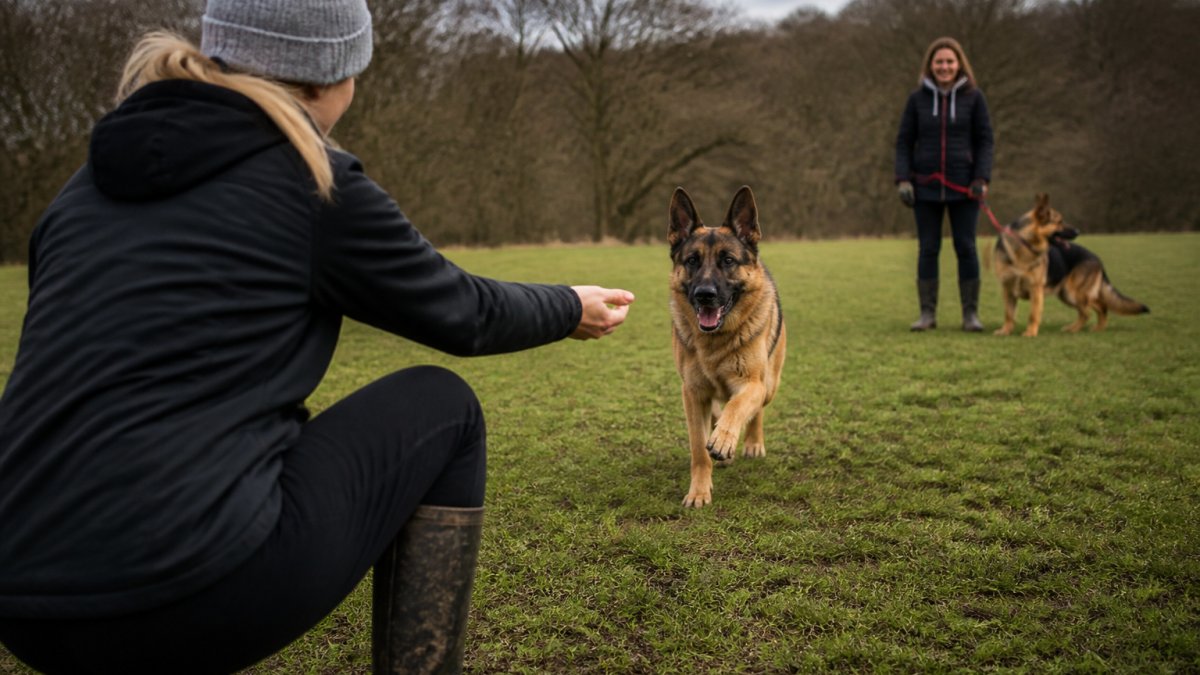
Your dog learns location-specific behaviours. Loose lead walking in your garden is different from loose lead walking on a busy high street. Practise in different places: parks, quiet streets, busier areas.
Each location teaches your dog something new.
Pro Tip Progress takes weeks or months, not days. A reactive German Shepherd didn't become reactive overnight. He won't become calm overnight either. Consistent training is key.
Common Mistakes to Avoid
Most owners make the same mistakes when teaching loose lead walking reactive German Shepherd techniques. Knowing these helps you avoid them.
Mistake 1: Moving too fast
You're excited your dog is improving. You move closer to triggers. Your dog reacts. You've broken his confidence and set training back weeks.
Progress slowly. If your dog is calm, you're moving at the right pace. If he reacts, you moved too fast.
Mistake 2: Inconsistent rewards
You reward your dog sometimes but not always. Your dog gets confused. Is he supposed to walk calmly or not?
Reward every single time for the first few weeks. Once the behaviour is solid, you can reward randomly.
Mistake 3: Using the lead to correct
You jerk the lead when your dog reacts. This increases his fear and frustration. He becomes more reactive, not less.
The lead is for guidance, not punishment. Use it to move away from triggers, not to correct behaviour.
Mistake 4: Practising during high-stress times
You take your dog out during peak times, busy parks, crowded streets. Your dog is overwhelmed. Training fails.
Train during quiet times. Early mornings or weekday afternoons work well.
Mistake 5: Expecting perfection
Your dog has one bad walk. You think training isn't working. You give up.
Reactive dogs have good days and bad days. One bad walk doesn't erase weeks of progress. Stay consistent.
Building Consistency and Progress
Consistency is everything. One training session per week won't work. Your dog needs daily practice.
Aim for 15-20 minutes daily. Multiple short sessions are better than one long session. Your dog learns faster with frequent, brief practice.
Track your progress. Note the distance where your dog reacts. After two weeks, is it further away? After four weeks, is he calmer? Written progress helps you stay motivated.
Your German Shepherd's reactivity didn't develop overnight, and it won't disappear overnight either. But with consistent loose lead walking training, most dogs show noticeable improvement.
White Wolf Dog Training specialises in exactly this work. We teach you to read your dog's body language and make the right choices during walks. We build your confidence so you can train independently.
If you're struggling with loose lead walking and your reactive German Shepherd, book your free assessment with us. We'll review your dog's history, understand your specific challenges, and create a personalised plan that works for your situation.
The stress of managing a reactive German Shepherd is real. The constant worry about walks, the embarrassment when your dog lunges, the exhaustion of managing his behaviour, it takes a toll. But loose lead walking training changes that. When you have a plan, when you understand your dog's triggers, when you know exactly what to do, everything shifts. White Wolf Dog Training builds that plan with you. We teach you to read your dog's body language, manage his impulse control, and walk with confidence. Our relationship-based approach means you're not dependent on us, you become the trainer. Get in touch for your free assessment and discover how we can help your German Shepherd become the calm, connected companion you deserve.
Frequently Asked Questions
How do I know if my German Shepherd is within their reactive threshold distance?
Watch your dog's body language closely. Before lunging or barking, a reactive German Shepherd will show tension: ears forward, stiff posture, intense staring, or a locked jaw. Some dogs whine or pace. The reactive dog threshold distance is the point where these signs appear. Start at a distance where your dog notices triggers but remains calm, then gradually decrease the distance as training progresses. This is where counter-conditioning for reactive dogs begins.
Can loose lead walking training actually reduce my German Shepherd's reactivity?
Yes. Loose lead walking training teaches your dog that a relaxed lead signals safety and that you're managing the environment. Combined with counter-conditioning, it builds impulse control and shifts your dog's focus from triggers to you. Most owners notice calmer reactions within weeks, though German Shepherd lead reactivity takes consistent practice over months to fully resolve. The relationship-based approach strengthens your dog's trust in your leadership.
What's the difference between counter-conditioning and desensitisation?
Desensitisation gradually exposes your dog to triggers at low intensity until they no longer react. Counter-conditioning pairs the trigger with something positive (treats, play) so your dog's emotional response changes. For reactive dogs, counter-conditioning is effective because it rewires your dog's brain chemistry—your German Shepherd learns to expect good things when triggers appear, rather than simply ignoring them.
How long does it typically take to see improvement with loose lead walking?
Many owners see noticeable changes within weeks of consistent daily practice. However, fully resolving German Shepherd lead reactivity takes consistent practice, depending on how entrenched the behaviour is and how frequently you train. Consistency matters more than duration—short daily sessions (10-15 minutes) often produce faster results than occasional longer sessions.
Book Your FREE no obligation 1:1 assessment
Comments