Stop German Shepherd Lunging at Dogs: A Practical Guide
Table of Contents
Why Your German Shepherd Lunges and How to Start
Understanding German Shepherd Leash Reactivity
Dog Threshold Distance Training: The Key to Calm Walks
Frequently Asked Questions
Last Updated: October 20, 2026
Why Your German Shepherd Lunges and How to Start
To stop German Shepherd lunging at dogs, start with one fact: your dog is not being dominant or spiteful. Lunging on the lead is an emotional response, usually rooted in fear, frustration or over-arousal.
Tom Davis Dog Training
Lead reactivity is an exaggerated emotional reaction on a walk, lunging, barking, pulling or freezing. It is a feeling problem before a behaviour problem.
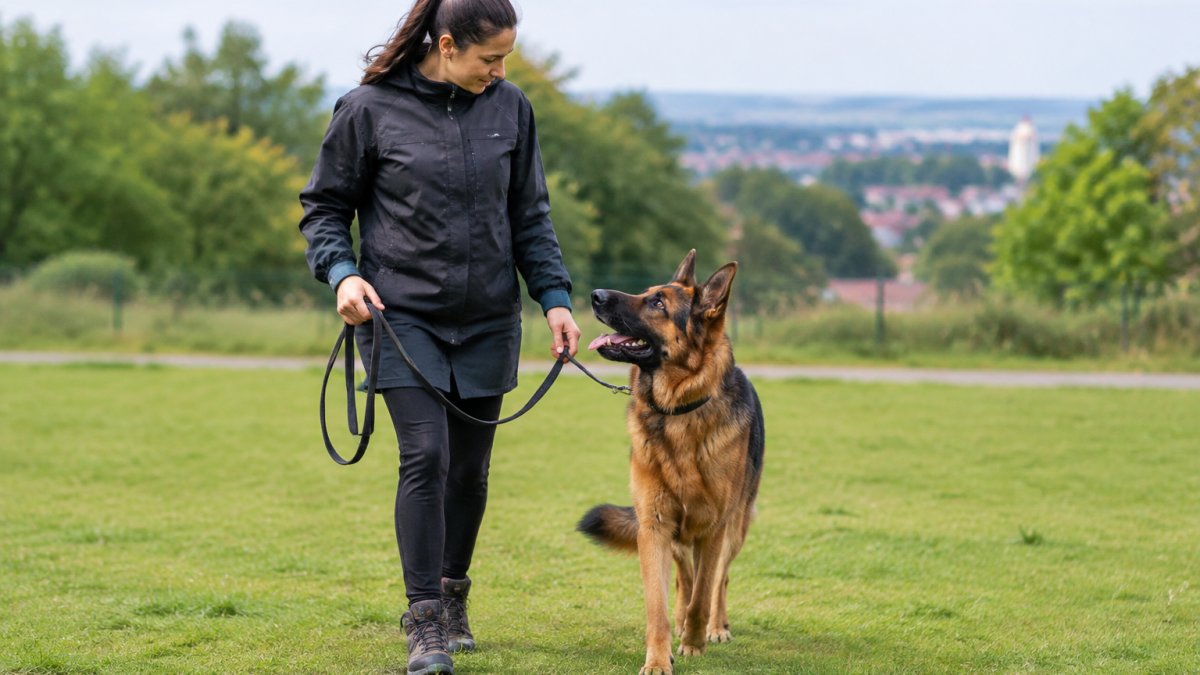
Correction suppresses the outward behaviour while leaving the emotion untouched, so the feeling builds and the behaviour returns, often worse. Start with management: a well-fitted harness and fixed-length lead, quieter routes, and feeding part of daily food on walks so your dog focuses on you.
Watch Out Punishing a lunge with a lead jerk or shout feels like it works, but it teaches your dog that other dogs predict pain or shouting, deepening the fear. The lunge comes back harder, and often faster.
Understanding German Shepherd Leash Reactivity
German Shepherd lead reactivity is not aggression. Most reactive German Shepherds are anxious, not dangerous, and come from a breed built to notice everything and react quickly.
Three things often drive reactivity: distance (too close to the trigger, with no escape route), frustration (wanting to greet the other dog and cannot) and stacking (small stresses building until one final trigger tips the dog over).
Reactivity is a nervous system state, not a personality trait. Change the state through consistent, calm repetition and the behaviour follows, the principle behind our relationship-based approach.
If you are considering rehoming because walks have become unmanageable, that is more common than you might think, and exactly the kind of situation we work with. Book your free, no-obligation one-to-one assessment.
Dog Threshold Distance Training: The Key to Calm Walks

Dog threshold distance training means working your dog just outside the distance at which they react, then gradually closing the gap as calm holds. Find the distance where your dog notices another dog but can still eat, listen and think, that is the threshold.
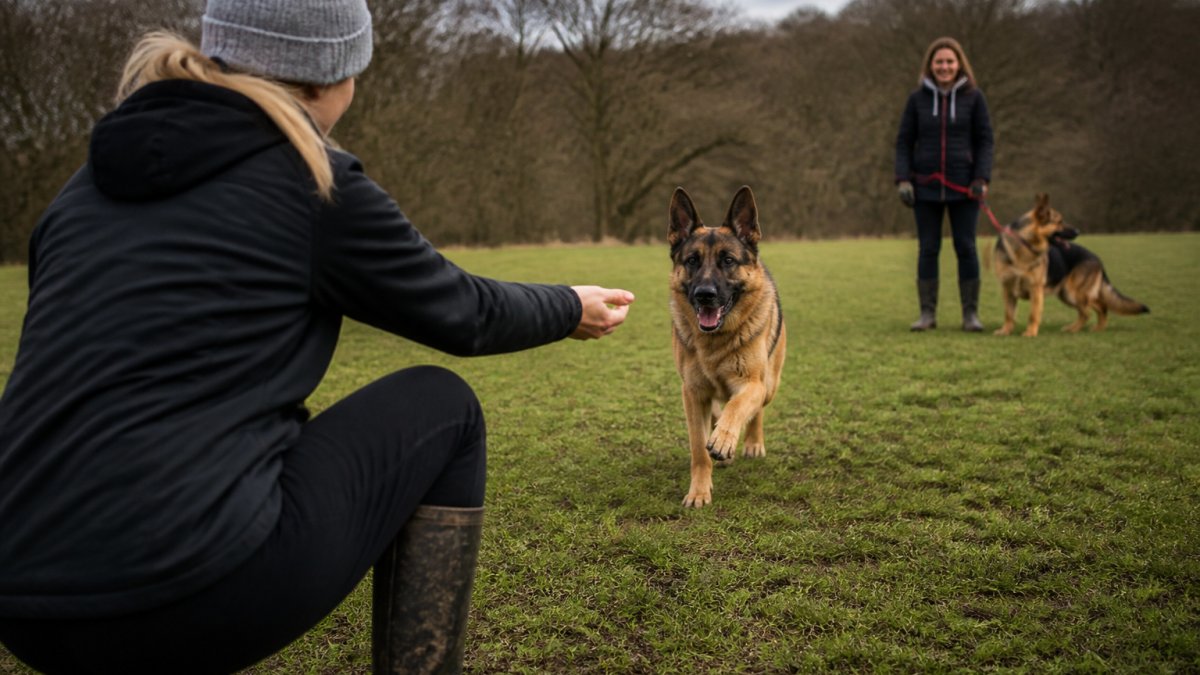
Find the distance where you first see alertness, move back until your dog can look at the other dog and then look away, mark and reward the moment they turn back to you, and close the gap by a metre or two only when calm is reliable. A bad repetition means you moved too fast, not that training failed. Short, frequent sessions of ten to fifteen minutes work best.
Pro Tip Use a distance marker you can actually see, such as a lamp post or parked car. When your dog holds calm there for three sessions running, move one marker closer, a measurable line instead of guessing.
Can you learn this yourself? Yes, the handling is the training. What one-to-one support adds is a trained eye on timing, the part most people cannot see alone.
Walks should not feel like a daily battle. If your German Shepherd is lunging at dogs and you are running out of ideas, we can help. At White Wolf Dog Training, we specialise in reactive German Shepherds and offer personalised one-to-one programmes built around your dog's history, plus a relationship-based method that helps you read body language and build reliable impulse control. We cover Reading and surrounding areas, including Bracknell and Wokingham. Book your free, no-obligation one-to-one assessment and take the first calm step.
Frequently Asked Questions
Why does my German Shepherd lunge at other dogs?
German Shepherds often lunge because they feel anxious, frustrated, or overexcited when they see another dog. Their protective instincts and strong prey drive can make them react before they think. It is not about dominance or being 'bad'. With German Shepherd lead reactivity, the key is to change how your dog feels about other dogs, not just suppress the behaviour. A relationship-based approach that builds calm associations will reduce lunging over time.
How far away should my dog be from other dogs during training?
This is the core of dog threshold distance training. You need to find the distance at which your dog notices another dog but can still eat a treat and respond to you. That might be 20 metres, 50 metres, or more. Start there and gradually decrease the distance as your dog stays calm. Never push closer just because you think they 'should' cope. For personalised threshold work in Reading and surrounding areas, contact White Wolf Dog Training for a free assessment.
How long does it take to improve lead reactivity?
There is no fixed timeline. Progress depends on your dog's history, how consistent you are, and how often you can practise. Some owners see clear improvement in a few weeks; others need several months. A structured reactive dog training plan with daily short sessions is more effective than occasional long ones. Be patient and celebrate small wins. If you feel stuck, one-to-one support can help you adjust the plan and keep moving forward.
Book Your FREE no obligation 1:1 assessment
Comments